
The Death of the Change Log: Why "Silent" Security Updates Are the New Normal in 2026
For decades, the hosting industry operated under a predictable security rhythm. A major local privilege escalation (LPE) kernel vulnerability would emerge perhaps once a year. System administrators would scan the vendor change logs, assess the threat, and schedule a patch window or server reboot when convenient.
That era is officially over.
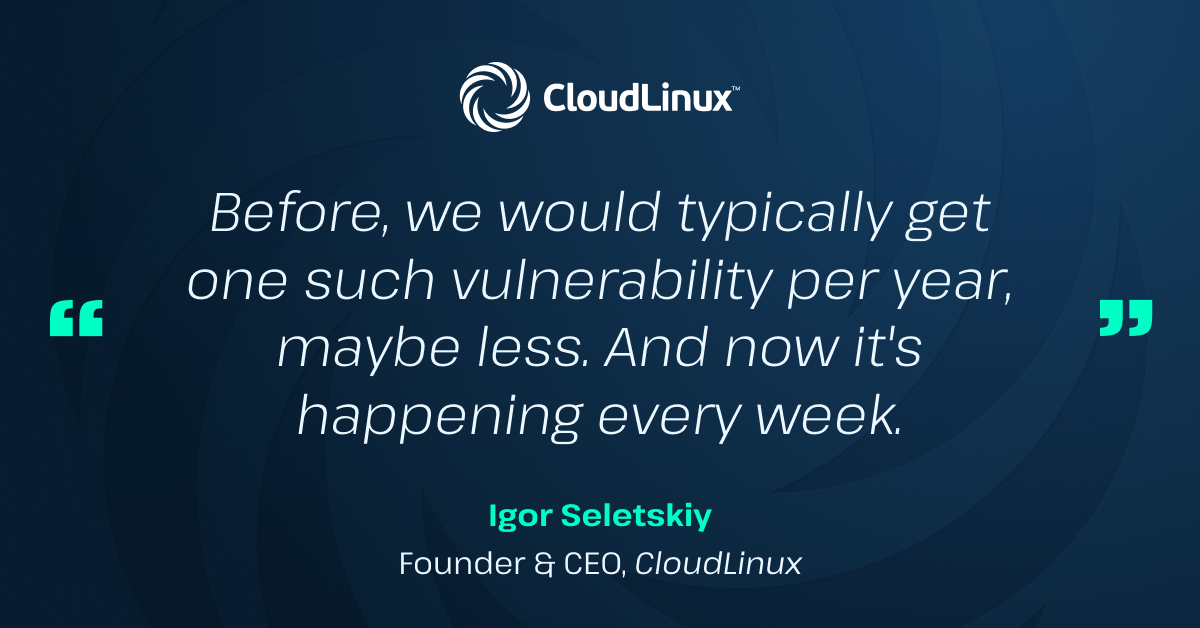
In a matter of just a few weeks, the industry has suffered a rapid succession of root exploits — Copy fail, Dirty frag, and Fragnesia, to name a few. We are no longer dealing with isolated, seasonal security events. We are living through a continuous barrage where new critical kernel vulnerabilities are surfacing weekly. Based on what I'm seeing, the next three to six months will be extremely intense, and the overall elevated threat environment will persist for roughly a year and a half.
CloudLinux OS 8 and 9 in post RedHat world
Today CloudLinux OS OS 8 and 9 are based on AlmaLinux OS. The recent news from RedHat brings up a lot of questions regarding the feasibility of that solution going forward. CloudLinux remains committed to being a sponsor of the AlmaLinux OS Foundation. We believe there is a need for free, enterprise-grade operating systems.
Debunking the Blame Game: Why Web Hosts, Not Users, Must Own WordPress Website Security
In today's digital landscape, website security is of paramount importance, especially for WordPress sites. A common misconception is that the responsibility for website security falls squarely on the end user or website owner. However, this perspective is short-sighted and neglects the intricate and ever-evolving nature of the WordPress ecosystem. In reality, web hosts should step up and take charge of their customers' website security, putting an end to the blame game. Here's why:
.jpg)
TuxCare - our new brand that brings together all Enterprise products
 CloudLinux Enterprise services have been growing steadily for years now. KernelCare, for example, was launched around 6 years ago as a live patching tool for the Linux Kernel. Since then we have added several useful integrations for vulnerability scanners, automation tools and others, and we also released KernelCare+ which adds live patching for OpenSSL and glibc shared libraries.

Introducing AlmaLinux Beta: A Community-Driven Replacement for CentOS
 CloudLinux is proud to announce the release of AlmaLinux Beta. We’ve collected community feedback and built our new beta release around what you would expect from an enterprise-level Linux distribution. AlmaLinux is a completely free 1:1 binary compatible fork of Redhat Enterprise Linux (RHEL) 8 inspired by the community and built by the engineers and talent behind CloudLinux. Visit https://almalinux.org to download the Beta images.
AlmaLinux is born!!
 Alma means “soul” in many Latin languages, including Spanish and Italian. The word comes from the Latin word almus, which means “nourishing, kind”.
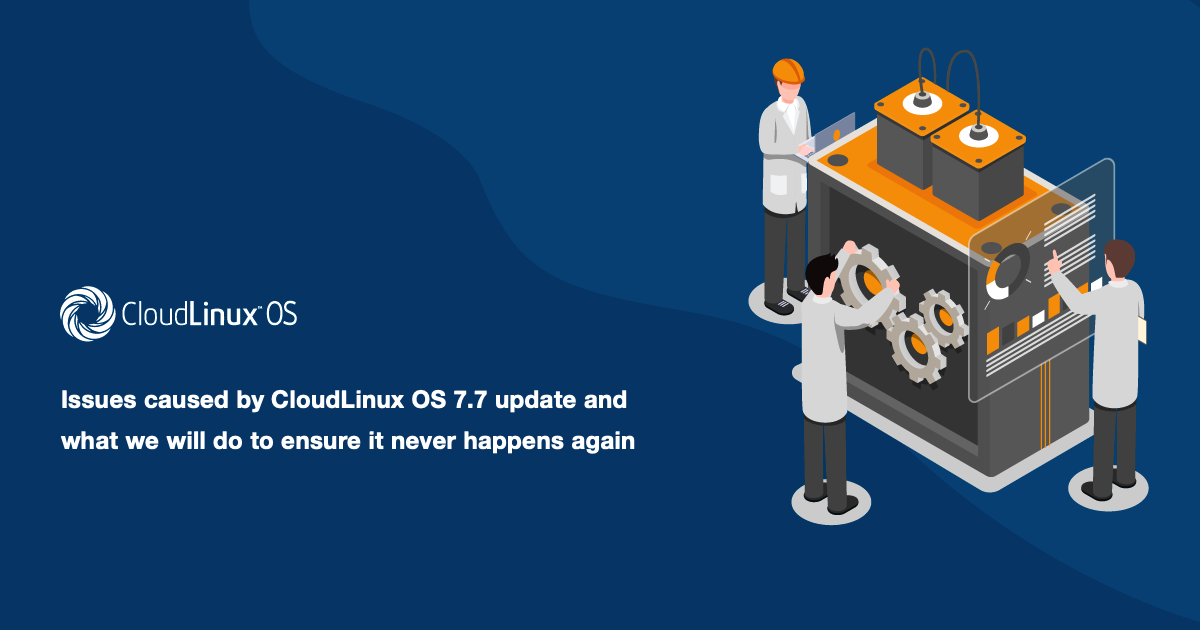
Issues caused by CloudLinux OS 7.7 update and what we will do to ensure it never happens again
Make cPanel more cost-effective with Elastic Sites
.png)